
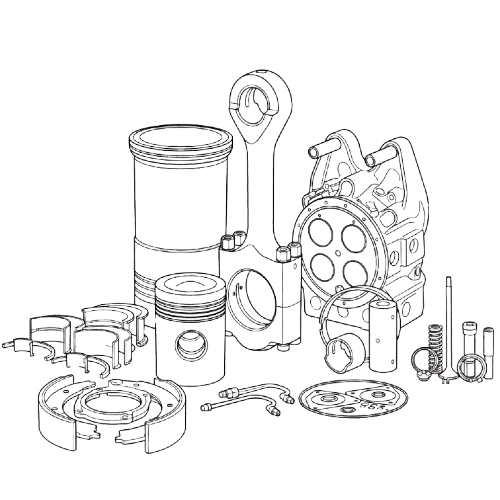
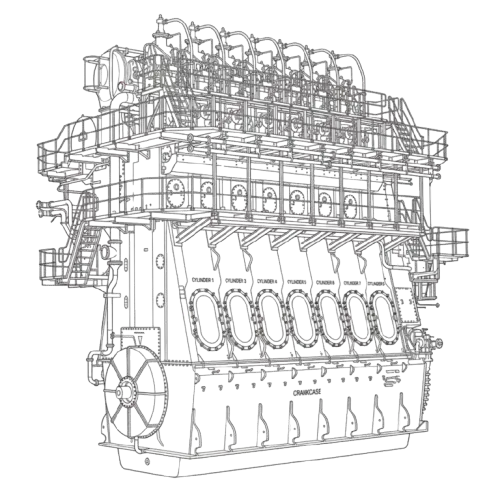

A marine diesel engine works under demanding conditions, often running continuously for days or weeks. Among the components exposed to the highest temperatures is the exhaust valve. It allows burnt gases to leave the combustion chamber while maintaining proper sealing during compression and combustion.
Over time, exposure to hot gases, combustion deposits, and repeated mechanical movement can affect the valve’s condition. A damaged exhaust valve may cause loss of compression, increased exhaust temperature, poor fuel efficiency, or unexpected engine downtime.
Understanding common exhaust valve failures and knowing when replacement is necessary can help ship operators avoid expensive repairs and keep their engines operating reliably.
What Does an Exhaust Valve Do in a Marine Engine?
The exhaust valve controls the release of combustion gases from the engine cylinder. It opens at the required point in the engine cycle, allowing gases to flow into the exhaust system, and closes to seal the combustion chamber.
Marine engines use different exhaust valve arrangements depending on their design. Medium-speed four-stroke engines generally have valves fitted in the cylinder head, while large two-stroke engines commonly use a centrally positioned exhaust valve assembly.
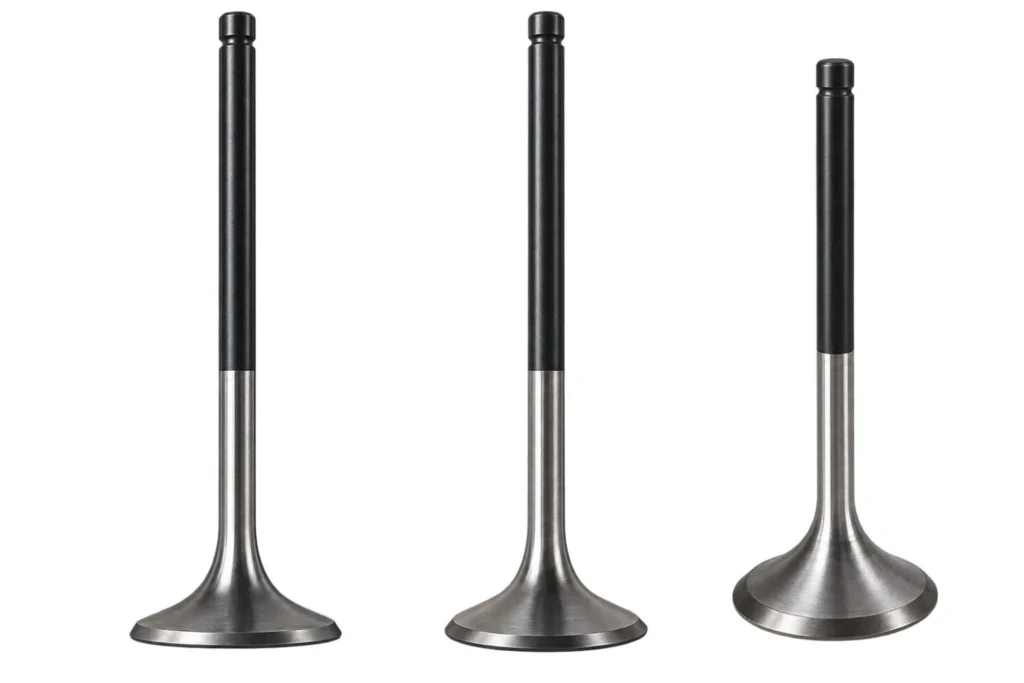
A typical arrangement may include a valve spindle, valve seat, guide, spring or air-spring mechanism, and operating components.
When these parts work correctly, the valve opens and closes smoothly and maintains a tight seal. Even a small amount of leakage can create a concentrated hot spot, eventually damaging the valve face and seat.
Common Marine Engine Exhaust Valve Failures
1. Burning of the Valve Face
A burnt exhaust valve is one of the more serious problems encountered during engine maintenance.
Burning usually begins when the valve does not seal properly against its seat. Hot combustion gases escape through a small opening, causing local overheating and gradual erosion of the metal.
Possible causes include:
- Carbon deposits preventing proper seating
- Worn or damaged valve seats
- Incorrect valve clearance or timing
- Poor valve cooling
- Excessive combustion temperatures
As the damage progresses, the engine may lose compression and the affected cylinder may show abnormal exhaust temperatures.
A severely burnt valve generally requires replacement, although minor seat damage may be repairable within the manufacturer’s limits.
2. Valve Seat Wear and Leakage
The valve seat provides the sealing surface against which the exhaust valve closes. Continuous contact, high temperatures, and combustion deposits gradually wear this surface.
Uneven seating can allow gases to escape during combustion. This may result in reduced engine performance, increased fuel consumption, and damage to the valve face.
During overhaul, engineers should examine the seating surface for pitting, erosion, cracks, and uneven contact.
If the seat remains within the permitted dimensions, machining or reconditioning may be possible. Excessively worn or cracked seats should be replaced.
3. Carbon Deposits and Sticking Valves
Carbon accumulation is another common issue, particularly when combustion conditions are poor.
Deposits can build up around the valve spindle, guide, and seating area. Heavy accumulation may restrict valve movement or prevent complete closure.
A sticking exhaust valve can lead to irregular operation, abnormal exhaust temperatures, and mechanical damage.
Possible contributing factors include poor fuel combustion, injector problems, unsuitable operating conditions, and insufficient maintenance.
Cleaning may solve minor deposit-related problems, but the valve spindle and guide must also be inspected for wear, scoring, or distortion.
4. High-Temperature Corrosion
Marine exhaust valves operate in an environment where heat and fuel-related contaminants can cause corrosion.
Certain fuel contaminants, including vanadium and sodium, can contribute to high-temperature corrosion. The severity depends on fuel composition, operating temperature, and engine conditions.
Corrosion may appear as pitting or material loss on the valve head, spindle, or seating surfaces.
If corrosion significantly reduces material thickness or damages the sealing area, replacement may be safer than further reconditioning.
5. Valve Spindle and Operating Mechanism Problems
The valve spindle must move freely and remain correctly aligned.
Excessive guide clearance, insufficient lubrication where applicable, damaged operating components, or mechanical wear can interfere with normal movement.
Depending on the engine design, failures may also involve valve springs, air-spring systems, hydraulic actuators, or valve rotators.
These problems can cause incomplete closure, unusual mechanical noise, or incorrect valve movement.
Replacing only the spindle without checking the associated components may allow the same failure to occur again.
Warning Signs of a Damaged Exhaust Valve
Exhaust valve problems are not always immediately visible. Engineers often identify possible faults by monitoring operating parameters and comparing individual cylinders.
Common warning signs include:
- Unusual exhaust gas temperature on one cylinder
- Reduced compression pressure
- Loss of engine power
- Increased fuel consumption
- Abnormal noise around the valve assembly
- Irregular valve movement
- Visible burning, cracks, or erosion during inspection
These symptoms do not automatically confirm exhaust valve failure. Fuel injection problems, incorrect timing, and other engine faults can produce similar indications.
A proper diagnosis should include operating data, inspection findings, and the engine manufacturer’s troubleshooting procedures.
When Should a Marine Exhaust Valve Be Replaced?
Not every damaged exhaust valve needs immediate replacement. Some components can be reconditioned, provided they remain within the manufacturer’s specified tolerances.
Minor surface damage may be corrected through approved grinding or machining procedures. However, repeated reconditioning gradually reduces the available material.
Replacement is generally necessary when the valve has cracks, excessive spindle wear, serious corrosion, severe burning, or dimensions outside the allowable limits.
Engineers should also consider the condition of the valve seat and guide. Installing a new valve against a badly worn seat may result in premature failure.
The decision should be based on inspection measurements rather than appearance alone.
Marine Engine Exhaust Valve Replacement Guide
Replacing an exhaust valve requires careful preparation and attention to the engine manufacturer’s instructions.
Step 1: Prepare the engine
Stop the engine, allow it to cool, and follow the required isolation and lockout procedures. Stored hydraulic and pneumatic pressure must be safely released before dismantling.
Step 2: Remove the valve assembly
Disconnect the relevant operating connections and remove the valve or valve cage using the approved lifting equipment and service procedure.
Step 3: Inspect related components
Examine the valve seat, spindle guide, seals, and operating mechanism. Check for cracks, deposits, abnormal wear, and evidence of overheating.
Step 4: Verify the replacement part
Confirm the engine model, part number, dimensions, material specification, and compatibility before installation.
Step 5: Install and check operation
Fit the replacement using the manufacturer’s prescribed procedure, including specified clearances, tightening requirements, and functional checks.
After reassembly, verify correct operation and monitor cylinder performance during the approved return-to-service procedure.
Actual dismantling, adjustment, and testing requirements vary considerably between engine designs.
How to Choose the Right Exhaust Valve Spare Parts
Selecting a replacement based only on its appearance can lead to compatibility problems.
Marine engines from manufacturers such as MAN B&W, Wärtsilä, Sulzer, Yanmar, and Daihatsu use different valve designs and specifications.
Before ordering, buyers should confirm the engine make and model, valve assembly part number, component dimensions, and whether a complete assembly or individual spare part is required. Explore Our Various Yanmar Exhaust Valve Inventory
For reconditioned components, inspection reports and dimensional measurements are particularly important.
Providing the engine serial number and photographs of the existing component can also help the supplier identify the correct spare part.
How to Extend Exhaust Valve Service Life
Regular inspection and good operating practices can reduce the risk of premature exhaust valve damage.
Maintain proper fuel injection performance, monitor cylinder exhaust temperatures, follow recommended maintenance intervals, and ensure that cooling and valve operating systems function correctly.
Fuel quality also deserves attention, especially where contaminants may contribute to deposits or corrosion.
Most importantly, investigate unusual operating trends early. A small sealing problem can develop into a much more expensive repair if left unattended.
Conclusion
Marine engine exhaust valves are exposed to extreme working conditions, making periodic inspection essential. Burning, seat wear, carbon deposits, corrosion, and operating mechanism faults are among the problems that can affect their reliability.
Recognizing these issues early and using correctly specified replacement components can help prevent unnecessary downtime.
For ship owners and marine maintenance teams, choosing suitable spare parts is just as important as carrying out the repair correctly.
Looking for marine engine exhaust valve spare parts?
Labdhi Marine can assist with enquiries for marine engine spare parts. Share your engine model, required part number, and component details through Labdhi Marine to discuss availability and sourcing options.