



Dry docking is a very important time for any ship. It is when the ship is taken out of the water so that engineers can check, repair, and service it. During this time, many machines are opened. Some parts are repaired, and some parts are replaced.
Because the ship cannot work during dry dock, everything must be planned well. One of the most important things is preparing spare parts before the ship reaches the dock. If spare parts are not ready, the ship will stay longer in the yard. This increases cost and causes delay.
Proper planning and inspection of spare parts before dry dock helps avoid delays and unexpected costs. In addition to dry dock preparation, proper maintenance of marine spare parts plays a key role in preventing costly failures
This simple guide will help ship owners, managers, and engineers understand how to prepare spare parts before dry docking.
Ships also need to follow safety and maintenance rules given by organizations like the International Maritime Organization. Good planning helps ships stay safe and avoid problems.
Why Spare Parts Planning Is Important
During dry docking, engineers check all major machines. When they open the machines, they may find worn or damaged parts. These parts must be replaced quickly.
If spare parts are not available:
- Work stops
- Dock time becomes longer
- Cost becomes higher
- Ship delivery gets delayed
So, planning spare parts early is very important.
Step 1: Check the Ship Condition
Before making a list of spare parts, the ship must be inspected.
Engineers should check:
- Engine reports
- Fuel use
- Oil test reports
- Temperature records
- Noise and vibration
They should also do a physical inspection and check for:
- Oil leaks
- Water leaks
- Rust
- Damage
- Loose parts
This helps in making the correct spare parts list.
Main Engine Spare Parts
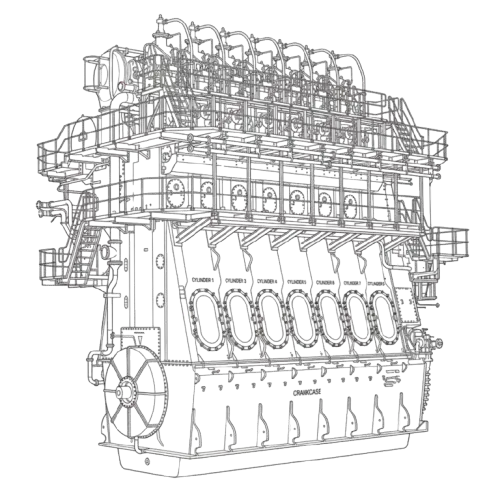
The main engine is the most important part of the ship. It is checked carefully during dry dock.
Common spare parts include:
- Cylinder liners
- Pistons
- Piston rings
- Cylinder heads
- Fuel injectors
- Exhaust valves
- Bearings
- Gaskets
- Oil filters
It is always better to use good quality or OEM parts. These parts last longer and work better.
Auxiliary Engine Spare Parts
Auxiliary engines give power to the ship. Without them, the ship cannot run its systems.
Important spare parts:
- Fuel injectors
- Pistons
- Valves
- Bearings
- Filters
- Cooling pump parts
Auxiliary diesel generators operate continuously to supply vital electrical power for ship navigation, pumps, and accommodation systems. We supply tested, class-inspected auxiliary engine spare parts including pistons, cylinder heads, connecting rods, and fuel injection pumps—to minimize off-hire downtime.
Heat Exchanger Spare Parts
Heat exchangers keep the engine cool. If they do not work well, the engine can overheat.
Spare parts may include:
- Tubes
- Gaskets
- Seals
- Covers
Cleaning and checking heat exchangers improves performance.
Pump and Compressor Spare Parts
Ships use many pumps and compressors.
Spare parts include:
- Mechanical seals
- Bearings
- Impellers
- Filters
- Valve kits
To avoid scale fouling and seawater corrosion in your cooling circuits, explore our ready-to-dispatch inventory of marine heat exchanger spares.
Hydraulic System Spare Parts
Hydraulic systems control steering and deck machines.
Important spare parts:
- Pumps
- Motors
- Hoses
- Seals
- Filters
Prevent sudden pressure drops and system lockups with our inventory of tested marine hydraulic system spare parts.
Electrical and Control Parts
Modern ships use many electrical systems.
Spare items include:
- Sensors
- Relays
- Circuit breakers
- Switches
Keep critical engine room pumps, blowers, and deck machinery running smoothly by sourcing inspectable marine electric motors and spares ready for fast port dispatch.
Hull and Deck Items
Dry docking is the best time to check the outside of the ship.
Spare items:
- Anodes
- Paint and coating
- Bolts
- Hatch rubber
This prevents corrosion and leakage.
Tank and Pipe System Parts
Tanks and pipes must be inspected.
Spare parts:
- Valves
- Gaskets
- Flanges
- Pipes
This helps avoid leaks and pollution.
Safety Equipment
Safety is very important.
Check and replace if needed:
- Fire pump parts
- Lifeboat parts
- Emergency lights
- Breathing equipment
All safety systems must work properly.
Choosing the Right Supplier
A good marine spare parts supplier makes dry docking easy.
Choose a supplier who:
- Has experience
- Gives good quality
- Delivers on time
- Provides support
A trusted supplier helps avoid last-minute problems.
Budget Planning
Dry docking is expensive. But planning helps save money.
Tips:
- Order early
- Avoid buying extra
- Check old reports
- Monitor machines regularly
Good planning reduces cost.
Common Mistakes
Many companies make simple mistakes.
- Ordering late – causes delay.
- Buying too much – increases cost.
- Poor communication – creates confusion.
- Ignoring past reports – leads to repeat problems.
Learning from past dry docks helps improve future planning.
Importance of Regular Maintenance
Regular maintenance makes dry docking easier.
Important checks:
- Running hours
- Oil testing
- Temperature
- Vibration
Preventive maintenance reduces sudden failure.
Using Digital Systems
Many companies now use software to manage spare parts.
Benefits:
- Easy tracking
- Automatic reminders
- Better planning
This saves time and reduces mistakes.
Final Checklist Before Dry Dock
Before the ship reaches the yard, confirm:
- Spare parts are ready
- Drawings are available
- Service engineers are booked
- Budget is approved
- Survey schedule is fixed
This ensures a smooth process.
Conclusion
Preparing spare parts before dry dock is very important. It helps reduce delay, save money, and improve safety. From engines to safety equipment, everything must be planned.
A good checklist and a trusted supplier make dry docking simple and smooth. With proper planning, the ship can return to work safely and on time.