

Quick Answer
Turbochargers in ships usually fail because of poor maintenance, oil problems, contamination, or overheating. Since they operate at high speed and temperature, even a small issue can quickly turn into a major failure.
If not handled early, a turbocharger failure can reduce engine efficiency, increase fuel consumption, and in worst cases, stop the engine completely. That’s why understanding the basics is very important for anyone working with marine engines.
Let’s Talk Real — Why This Matters
If you’ve worked on ships, you already know that problems rarely start big. In most cases, a small issue slowly builds up and eventually becomes a serious breakdown. Turbochargers are a perfect example of this.
A marine turbocharger runs continuously under heavy load. It doesn’t get rest, and it works in extreme conditions. Because of this, even a minor mistake in maintenance or operation can create serious trouble over time.
What is a Turbocharger (In Simple Words)?
A turbocharger in a marine engine is used to increase the amount of air entering the engine. More air helps in better fuel combustion, which improves engine power and efficiency.
In simple terms, a ship turbocharger helps the engine perform better without increasing engine size. It plays a key role in ensuring smooth operation, especially when the vessel is carrying heavy loads or running for long durations.
How It Works (Without Complication)
The working of a marine engine turbocharger is simple but powerful. Exhaust gases from the engine spin a turbine, which is connected to a compressor. This compressor pushes more air into the engine.
This continuous cycle improves combustion and increases efficiency. However, since this process happens at very high speed and temperature, the turbocharger is always under stress and requires proper care.
Why Do Turbochargers Fail?
When people ask, why do turbochargers fail, the answer is usually not just one reason. It is often a combination of factors like poor maintenance, oil issues, and contamination.
In many cases, failures happen because small warning signs are ignored. A minor issue like dirty oil or a blocked filter can slowly damage internal parts and eventually lead to complete turbocharger failure.
Common Turbocharger Problems You’ll See Onboard
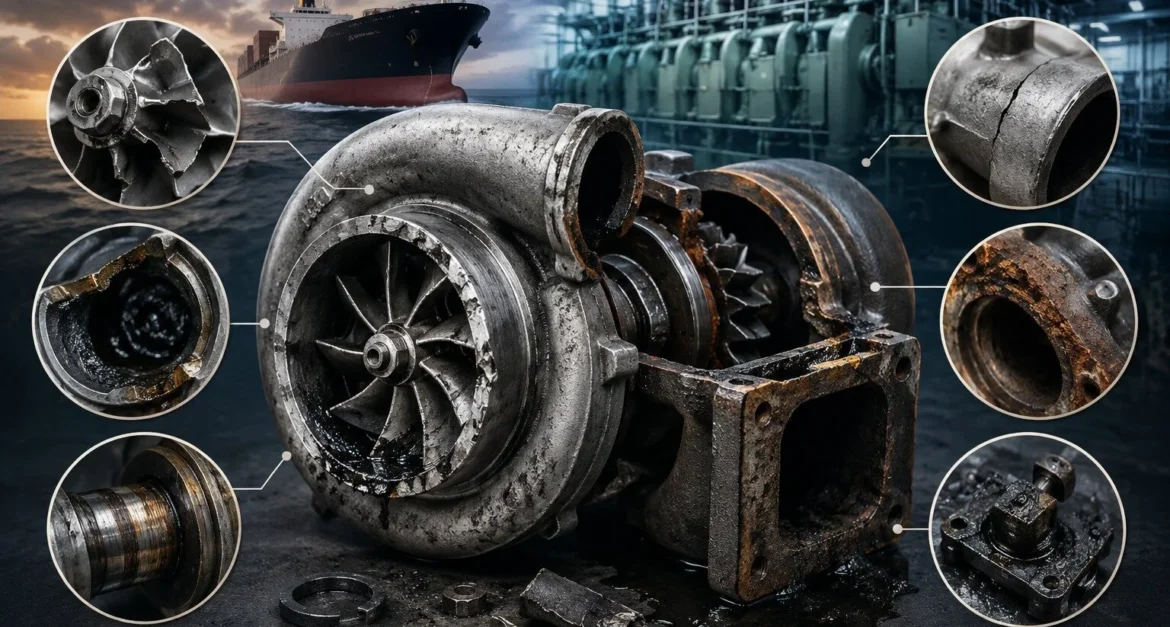
There are many common turbocharger problems and failures seen in ships. Most of these issues are not sudden but develop over time due to wear and tear.
Understanding these problems early helps in taking quick action. This not only reduces repair cost but also prevents unexpected engine breakdowns during operation.
1. Turbocharger Oil Leakage
Turbocharger oil leakage is one of the most common issues found in marine engines. It usually happens when seals wear out or when there is a problem with oil flow inside the system.
You may notice oil around the turbocharger or smoke from the exhaust. If ignored, this can reduce efficiency and lead to further internal damage, making turbocharger repair necessary.
2. Bearing Failure
Bearings are critical components in a marine turbocharger because they support high-speed rotation. If lubrication is not proper, these bearings can wear out quickly.
Once bearing damage starts, you will notice vibration, noise, and reduced performance. If not fixed early, it can lead to complete turbocharger breakdown.
3. Dirt Damage (Compressor Side)
The compressor side of the turbocharger is sensitive to dirt and foreign particles. If air filters are not working properly, dust can enter and damage the blades.
This reduces airflow and affects engine performance. It is one of the most avoidable turbocharger issues, but still very common due to poor maintenance.
4. Turbine Damage
The turbine side handles hot exhaust gases continuously. Over time, high temperature and deposits can weaken the turbine blades.
This affects the performance of the marine engine turbocharger and can lead to serious damage if not cleaned or inspected regularly.
5. Carbon Build-Up
Carbon deposits build up slowly inside the turbocharger due to incomplete combustion or poor fuel quality. This is a very common issue in marine engines.
Over time, this build-up reduces efficiency and increases fuel consumption. Regular cleaning is necessary to avoid such turbocharger problems.
6. Overspeeding
Turbochargers operate at very high speeds. If something goes wrong, such as sudden load changes, the turbocharger may overspeed.
Overspeeding can damage blades and shafts, leading to serious failure. It is one of the more dangerous turbocharger failure reasons.
7. Corrosion (Very Common at Sea)
Ships operate in a harsh marine environment where salt and moisture are always present. This leads to corrosion in turbocharger components.
Corrosion weakens parts over time and reduces efficiency. It is a major long-term cause of turbocharger failure in ships.
Signs Your Turbocharger is Failing
Recognizing turbocharger failure symptoms early can prevent major breakdowns. Many failures give warning signs before becoming serious.
Common signs include power loss, unusual noise, smoke, and oil leakage. Ignoring these signs can lead to expensive repairs and operational delays.
Real Causes of Turbocharger Failure
The main causes of turbocharger failure are often related to maintenance and operating conditions. Poor lubrication is one of the biggest reasons.
Contaminated oil, blocked filters, and improper operation also play a major role. These issues slowly damage internal components and reduce performance.
Why Maintenance is Everything
Proper turbocharger maintenance is the best way to avoid failure. Most problems can be prevented with regular inspection and cleaning.
Simple steps like checking oil quality, replacing filters, and monitoring performance can increase the life of a turbocharger significantly.
Turbocharger Repair – When Things Go Wrong
When damage occurs, turbocharger repair becomes necessary. Repair work may include replacing bearings, seals, and cleaning internal parts.
However, repair should always be done by experienced professionals. Poor repair work can lead to repeated failures and higher costs.
When Should You Replace It?
Sometimes repair is not enough, and replacement becomes the only option. This happens when the turbocharger is severely damaged or worn out.
Repeated failures and reduced efficiency are clear signs that replacement is needed. Timely replacement ensures reliable engine performance.
Choosing the Right Turbocharger Parts Supplier
Selecting the right turbocharger parts supplier is very important for long-term reliability. Good quality parts reduce the chances of failure.
A reliable supplier will provide genuine, tested components with proper support. This ensures better performance and peace of mind.
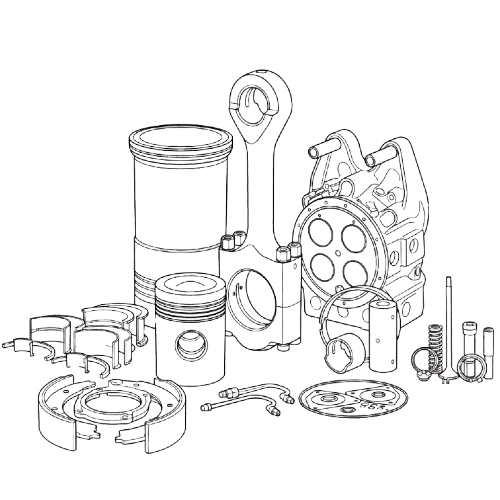
Maintaining optimum combustion efficiency and engine power output requires a turbocharger that operates flawlessly under extreme thermal stress and high rotational speeds. Any wear on internal components can quickly lead to surging, elevated exhaust temperatures, and severe drops in overall fuel economy. To ensure your auxiliary and main engine forced-induction systems run smoothly, we maintain an extensive inventory of marine turbocharger spares, including rotor assemblies, turbine blades, compressor wheels, nozzle rings, casing covers, and high-precision bearing units.
Simple Tips to Avoid Turbocharger Problems
Avoiding turbocharger problems is not complicated. It mainly depends on regular care and attention.
Using good oil, maintaining filters, and following proper operating procedures can prevent most failures. Small efforts can save big costs.
The Real Impact of Turbocharger Failure
A failed ship turbocharger can cause serious operational issues. It can lead to engine breakdown and delay the entire voyage.
In marine operations, time is critical. Even a small failure can result in large financial and operational losses.
Final Thoughts
A marine turbocharger is a small part but plays a big role in engine performance. Most failures happen due to neglect or lack of proper maintenance.
By understanding turbocharger failure reasons and symptoms, you can take early action and avoid major problems. Prevention is always better than repair.