


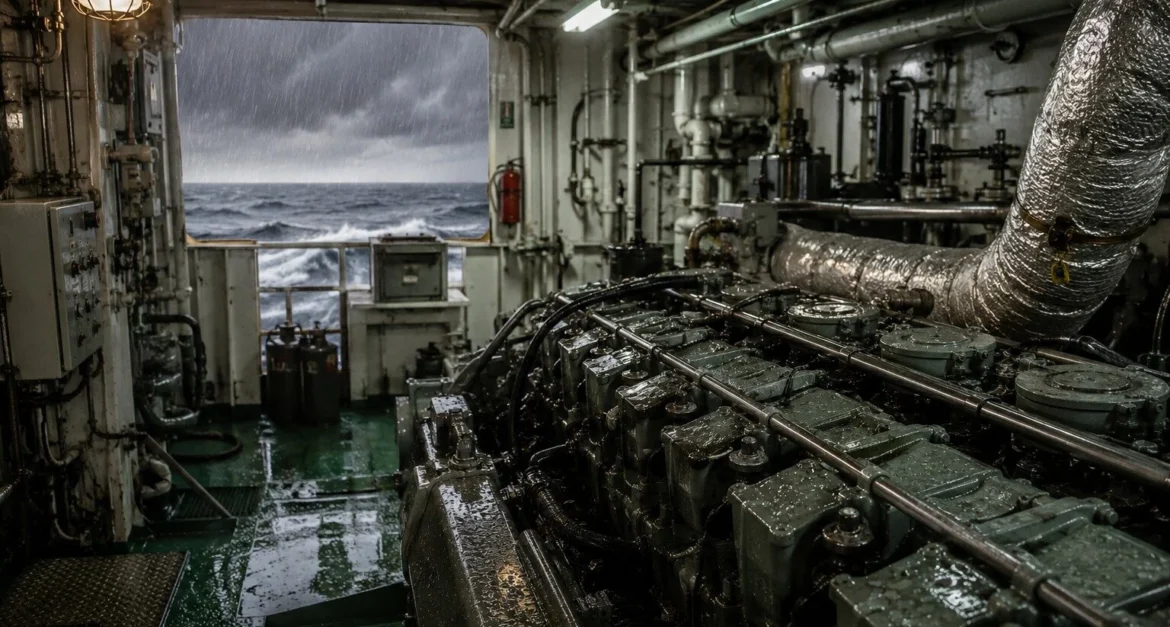
The rainy season is the silent enemy of offshore and coastal marine operations. Every year, vessels and rigs that survived months at sea succumb to something as deceptively simple as sustained rainfall — not storms, not rough seas, but persistent moisture, humidity, and the electrochemical chaos it triggers.
Understanding how climate affects marine equipment is no longer optional knowledge. It’s the difference between a fully operational fleet and a breakdown in the middle of a monsoon. This guide covers the root causes, the most vulnerable systems, and — most importantly — exactly how to build a bulletproof marine equipment maintenance strategy that outlasts any rainy season.
How Climate Affects Marine Equipment
Marine equipment doesn’t just deal with water — it deals with water in every form: saltwater spray, freshwater rain, condensation inside sealed compartments, humidity that seeps through gaskets, and thermal expansion caused by rapid temperature swings between sun and storm.
During the rainy season, these stressors compound. Humidity levels routinely exceed 90–95%, which creates a persistent electrolyte film on every metal surface. This invisible layer is all corrosion needs to begin its work. Combined with saltwater corrosion already present on offshore rigs and oceangoing vessels, the rainy season essentially accelerates every degradation process simultaneously.
“A metal surface doesn’t need to be submerged to corrode. At 80%+ relative humidity, atmospheric corrosion rates in marine environments rival those of direct seawater immersion.”
Electrical systems are especially vulnerable. Insulation absorbs moisture, resistance drops, and short circuits become far more likely. Mechanical joints that expand and contract with temperature cycles work moisture deeper into their tolerances with each rain event. Hydraulic systems face contamination. Fuel systems face microbial growth from water ingress.
Understanding these mechanisms is the foundation of any effective marine equipment corrosion strategy — because you can’t prevent what you don’t understand.
Why Do Industrial Instruments Fail in Rainy Season?
The question isn’t whether instruments will fail — it’s which instruments will fail first. Precision instruments aboard ships and rigs are designed to tight tolerances that become meaningless once moisture infiltrates their housings.
Here’s a breakdown of the primary failure mechanisms that marine engineers face every monsoon season:
Electrical Short Circuits
Moisture bridges conductors that were never meant to touch. Insulation resistance drops from megaohms to kilohms practically overnight, triggering shorts, blown fuses, and in worst cases, electrical fires.
Galvanic Corrosion
When two dissimilar metals sit in a moisture-laden environment, electrolytic action begins. Marine corrosion prevention must address galvanic pairs — aluminum next to steel, bronze near iron — before the season starts.
Hydraulic Contamination
Water in hydraulic fluid destroys pump efficiency, causes cavitation, and leads to catastrophic valve failure. Rainwater can enter through vent points or degraded seals within hours of a heavy downpour.
Fuel System Microbial Growth
Water condensation in fuel tanks is a perfect breeding ground for microbes that produce acidic byproducts, clogging filters and damaging injectors — a silent saboteur of marine engine maintenance.
Navigation Instrument Failure
Radar, GPS, and ECDIS units are rated for marine conditions, but connector corrosion and seal degradation over time leave them vulnerable to even light rainfall penetration during extended rainy seasons.
Battery Bank Degradation
High humidity accelerates self-discharge in lead-acid batteries. Terminal corrosion creates resistance that shows up as poor starting performance — right when you need your backup systems most.
| Equipment Type | Primary Failure Mode | Risk Level | First Sign |
|---|---|---|---|
| Main Engine | Fuel contamination, injector fouling | High | Rough idle, black smoke |
| Generators | Insulation breakdown, control panel corrosion | High | Ground faults, irregular Hz |
| Switchboards | Bus bar corrosion, relay failure | High | Tripped breakers, heat spots |
| Hydraulic Systems | Water contamination, pump cavitation | Med | Sluggish response, noise |
| Navigation Instruments | Connector corrosion, seal failure | Med | Intermittent signal loss |
| Deck Machinery | Wire rope fatigue, surface corrosion | Low-Med | Visible rust, stiffness |
The Dangers of Rain & Offshore Rig Life
On an offshore rig, the rainy season isn’t just an equipment management challenge — it’s a safety-critical operational scenario. The combination of elevated platforms, high-voltage electrical systems, heavy machinery, and a saturated atmosphere creates conditions that don’t exist in any onshore industrial setting.
Standing water on deck grating above high-voltage cable trays has caused multiple electrocution incidents during tropical rainy seasons. Deck drainage and cable insulation inspection must be completed before seasonal onset — not after the first incident.
Structural steel on offshore rigs faces an especially aggressive form of marine equipment corrosion: the splash zone. This area between the waterline and the first deck is perpetually wet during rainy season, denying the steel any drying period. Corrosion rates in the splash zone can be 3–5× higher than on fully submerged steel.
Helideck surfaces become dangerously slick from a combination of rain, sea spray, and rotor wash. Crane operations in wet conditions require reduced load ratings and increased inspection frequency. Personnel moving between platforms and vessel transfers in rough, rainy conditions face dramatically elevated fall and swing-line risks.
Emergency systems are the most critical concern. Lifeboat launching systems, fire suppression networks, and emergency generator sets must be verified as fully functional before rainy season begins. A failed emergency generator during a monsoon-season electrical fault is not a maintenance problem — it’s a catastrophe.
High humidity causes an 18–30% reduction in the dielectric strength of air. This means your electrical clearances — the safe distances built into switchboard design — are effectively reduced during monsoon conditions. Arc flash hazards increase significantly. Review PPE requirements and safe work procedures accordingly.
How to Protect Marine Equipment From Extreme Weather
Protection begins long before the first raincloud. Reactive maintenance — fixing things after they fail — costs an average of 4–9× more than planned preventive maintenance, according to industry studies. For marine assets operating in monsoon-prone regions, the economics of preparation are compelling.
Here is a structured approach to how to protect marine equipment from extreme weather:
Conduct a Pre-Season Corrosion Audit
Every metal surface visible from deck should be evaluated before rainy season. Use ultrasonic thickness gauges on structural steel, inspect all painted surfaces for blistering (the first sign of underneath corrosion), and check all zinc anodes — if they’re more than 50% depleted, replace them. Marine corrosion prevention is fundamentally a materials management discipline.
Weatherproof All Electrical Penetrations
Cable glands are your first line of defense against moisture ingress into electrical enclosures. Inspect every gland for cracking, re-torque loosened glands, and apply marine-grade sealant to any suspect areas. Upgrade IP ratings on outdoor junction boxes to IP66 minimum if they’re currently rated lower.
Flush and Refill All Fluid Systems
Hydraulic oil, engine coolant, and gearbox oil should all be sampled and tested before rainy season. Water-in-oil content above 0.1% is grounds for immediate change. This single step is among the highest-ROI actions in any marine engine maintenance programme.
Service All Generators Before Seasonal Onset
Proper marine generator maintenance is non-negotiable before rainy season. Replace air filters, check coolant freeze/boil protection levels, test automatic voltage regulators under load, inspect exhaust systems for moisture traps, and verify automatic transfer switch operation. A generator that fails during a monsoon storm leaves you without power, without climate control, and without instrumentation simultaneously.
Apply Protective Coatings Strategically
Not all coatings are equal. For underwater hull areas, antifouling paint with copper oxide content above 35% provides the best biocide action. For splash zones, use high-build epoxy coatings with glass flake reinforcement. For internal tank linings, two-part polyurethane provides the best combination of chemical resistance and adhesion.
Establish a Reliable Supply Chain for Spare Parts
Working with a qualified ship spare parts supplier before season onset — rather than scrambling during a breakdown — is one of the most overlooked aspects of rainy season preparedness. Identify your critical spares, determine minimum stock levels, and establish a relationship with a trusted marine spare parts supplier who can deliver to remote ports or rig locations. During peak monsoon season, logistics become unpredictable; having parts on board is always better than waiting for them.
The Rainy Season Ship Maintenance Checklist
A systematic ship maintenance checklist is the operational backbone of rainy season preparedness. The following checklist is structured by system and should be completed 4–6 weeks before seasonal onset to allow time for any sourced parts or specialist work:
🗒 Rainy Season Marine Maintenance Checklist
🔧 Engine Room Systems
⚡ Electrical & Generator Systems
🔩 Hull & Structural
🧭 Navigation & Safety Equipment
Why Your Spare Parts Strategy Matters More Than You Think
Even the best-maintained vessel will occasionally need parts. The question during rainy season is whether you can get them. Port congestion increases during monsoon periods. Air freight becomes unreliable. Road access to remote harbours can be cut off entirely.
This is why partnering with a reputable marine spare parts supplier before the season begins is a strategic, not merely logistical, decision. The best ship spare parts suppliers offer more than parts — they offer inventory management support, critical spares analysis, and emergency delivery networks that bypass standard logistics bottlenecks.
For rainy season readiness, consider maintaining onboard stock of at minimum:
| Spare Part Category | Minimum Onboard Quantity | Why Critical in Rainy Season |
|---|---|---|
| Fuel filter elements | 6-month supply | Water contamination causes rapid filter blockage |
| Hydraulic filter elements | 4-month supply | Water ingress degrades fluid rapidly |
| Bilge pump impellers | 2 per pump installed | Bilge pumps work hardest in heavy rain periods |
| Electrical cable glands | Assorted box of 50+ | Gland failures are the #1 cause of moisture ingress |
| Zinc anodes | Full hull set | Accelerated consumption in active monsoon conditions |
| Generator air filters | 3× installed quantity | High humidity clogs filters faster than normal |
Prevention Is Always Cheaper Than Failure
The rainy season will come whether you’re ready or not. Marine equipment corrosion, electrical failures, fuel contamination, and hydraulic breakdowns are not acts of nature — they’re the predictable consequences of inadequate preparation. Understanding how climate affects marine equipment transforms these “inevitable” failures into preventable events.
The framework is straightforward: audit before the season, protect every vulnerable system, maintain a systematic ship maintenance checklist, keep critical spares aboard with support from a trusted marine spare parts supplier, and invest in marine corrosion prevention before corrosion invests in destroying your assets.
Vessels and rigs that weather monsoon seasons without significant downtime share one characteristic: their maintenance teams treat the calendar as seriously as they treat their engineering manuals. The rainy season is not a surprise. The only surprise is the degree of preparation you bring to it.
“Every hour of planned maintenance eliminates an average of nine hours of unplanned downtime. In offshore operations, that calculation is worth every dollar of pre-season investment.”
Ready to Prepare Your Vessel?
Connect with a trusted marine spare parts supplier and get your pre-season maintenance audit scheduled before the monsoon arrives.
Get Pre-Season Checklist